Microsoft Build 2026: The Shift from Chatbots to Autonomous AI Agents

At Microsoft Build 2026, the company made a definitive pivot from simply embedding AI chatbots into applications to building autonomous "agentic" systems that run locally, securely, and seamlessly across your devices.
While previous years were defined by Microsoft's close partnership with OpenAI and its push for Copilot+ PCs, this year's developer conference felt like Microsoft's "Independence Day." The spotlight shifted to Microsoft's own foundational AI models, cross-platform hardware flexibility, and the infrastructure needed to let AI agents do our work for us.
Here is a breakdown of the biggest announcements from the event.
1. The Era of the AI Agent
The overarching theme of Build 2026 is the shift from chatbots that answer questions to agents that complete multi-step tasks autonomously.
Key insight: The goal is no longer just generating text or code, but orchestrating workflows where AI plans, uses tools, and collaborates without breaking your flow.
The crown jewel of this initiative is Microsoft Scout. Built on the open-source OpenClaw platform (internally known as Project Lobster), Scout is positioned as an "always-on" personal agent integrated directly into Microsoft 365. Rather than waiting for your prompt, Scout runs locally on your machine, proactively handling meeting prep, scheduling conflicts, and routine tasks in the background.
2. The "MAI" Model Family
Microsoft is noticeably reducing its reliance on OpenAI by introducing a brand new family of seven in-house foundational models, branded as "MAI."
| Model | Purpose |
| MAI-Thinking-1 | Microsoft's first dedicated reasoning model, trained from scratch on enterprise-grade data. |
| MAI-Code-1 | An inference-efficient coding model tuned specifically for GitHub Copilot and VS Code. |
| MAI-Image-2.5 | High-fidelity text-to-image and image-to-image generation. |
| MAI-Transcribe 1.5 | State-of-the-art accuracy across 43 languages. |
These models are designed to give developers more choice and will be available directly in Microsoft Foundry, PowerPoint, and OneDrive, as well as on third-party platforms like Fireworks AI.
3. The Hardware Shift: Beyond Copilot+ PCs
Last year, Microsoft insisted that the future of local AI required a "Copilot+ PC" equipped with a Neural Processing Unit (NPU). At Build 2026, Microsoft reversed course.
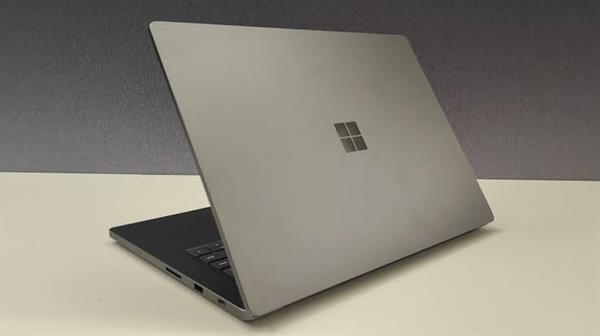
CEO Satya Nadella announced that developers can now target the full scope of existing hardware—including capable CPUs and standard GPUs—bringing local AI features to a vastly larger install base. To support this heavier local compute, Microsoft unveiled the Surface RTX Spark Dev Box and the Surface Laptop Ultra, both powered by Nvidia's new RTX Spark PC chips, offering massive AI compute for running trillion-parameter models locally.
4. Securing the Agentic Web
Because autonomous agents can act on your behalf, security and governance have become critical bottlenecks. Microsoft introduced several tools to keep these systems in check:
-
Microsoft Execution Containers (MXC): A sandbox layer built directly into Windows that restricts what an agent can access (files, network, etc.) at runtime, minimizing the risk of a rogue agent wiping data.
-
Agent 365 SDK: A suite of tools to help IT teams observe, govern, and enforce compliance on local agents across an organization.
-
MDASH (Multi-model agentic scanning harness): A security system that orchestrates over 100 specialized AI agents to discover, validate, and prove exploitable vulnerabilities in codebases before they ship.
5. Data Foundations: Fabric and Quantum
To make these agents truly useful, they need pristine enterprise data. Microsoft expanded Microsoft Fabric with Fabric IQ, which provides a shared semantic foundation over structured business data, and Azure HorizonDB, an enterprise-ready Postgres database engineered specifically for AI workloads.
Looking further ahead, Microsoft also teased Majorana 2, a scalable quantum processor that swaps aluminum for lead in its material stack, resulting in qubits that are reportedly 1000x more reliable than previous iterations.
Comments

|
|
| Follow up comments |
| {{e.Name}} {{e.Comments}} |
{{e.days}} | |
|
|
||
|
|
||
| {{r.Name}} {{r.Comments}} |
{{r.days}} | |
|
|
||