Nvidia Acquires Hugging Face for $12.93 Billion: What the Deal Means for the Future of Open AI

Nvidia has agreed to acquire Hugging Face for $12.93 billion in one of the biggest deals in the history of artificial intelligence. The agreement gives Nvidia a much deeper connection to the open AI ecosystem, while Hugging Face is expected to remain an open platform for developers building, sharing, customizing and deploying AI models.
The deal was announced on September 3, 2026, after weeks of reports that Nvidia was pursuing the AI developer platform. Nvidia filed a definitive agreement with the U.S. Securities and Exchange Commission, stating that the transaction is expected to close in the first half of 2027, subject to regulatory approvals and other customary closing conditions.
For the AI industry, this is much more than a simple acquisition. It brings together Nvidia's dominance in AI computing with one of the world's largest communities for open models, datasets and AI applications.
Nvidia-Hugging Face Deal Explained
Nvidia has agreed to acquire Hugging Face for $12,930,300,000.
According to Nvidia's SEC filing, approximately $11.9 billion will be paid to Hugging Face shareholders, while up to approximately $1 billion will be allocated through an equity-based retention program for Hugging Face employees joining Nvidia.
The transaction is subject to regulatory approval and other closing conditions, so it is more accurate to describe this as an agreed acquisition rather than a completed takeover.
The exact number attached to the transaction has also attracted attention online. The figure $12,930,300,000 was deliberately chosen as a reference to both companies' identities, with the number 129303 corresponding to the hexadecimal color associated with Nvidia's green and also connecting to Hugging Face's familiar branding.
What Is Hugging Face?
Hugging Face has become one of the most important platforms in the modern AI ecosystem.
Often described as a kind of “GitHub for AI,” the platform allows developers and researchers to share and use machine-learning models, datasets and applications.
Nvidia says Hugging Face currently has more than:
- 18 million developers, researchers and creators
- 3 million AI models
- 500,000 datasets
- 1 million applications
- 200,000 companies using its platform
That scale helps explain why Nvidia is willing to pay nearly $13 billion for the company.
Hugging Face isn't simply another AI startup. It has become a major distribution and collaboration layer for the open-model ecosystem.
Why Is Nvidia Buying Hugging Face?
The most obvious reason is strategic.
Nvidia has established an enormous lead in AI chips and accelerated computing. But the AI industry is increasingly becoming a competition across the entire stack:
Hardware → Infrastructure → Models → Developer Tools → Applications
Nvidia already has a major presence in hardware, infrastructure and AI software. Hugging Face gives the company significantly greater reach into the developer and open-model layers.
Reuters reported that the acquisition is part of Nvidia's broader effort to strengthen its position as open and lower-cost AI models become increasingly important.
This could give Nvidia a much stronger relationship with the developers who decide which models, frameworks, inference systems and computing platforms organizations use.
Hugging Face Will Remain Open
One of the biggest questions after the announcement was whether Nvidia would turn Hugging Face into an Nvidia-only ecosystem.
Nvidia says that will not happen.
CEO Jensen Huang stated that Hugging Face will remain an open platform for the entire AI ecosystem. Developers will continue to be able to choose their models, frameworks, cloud providers, inference services and computing platforms.
Most importantly, Nvidia says Nvidia computing will not be required to build or deploy through Hugging Face.
The SEC filing similarly says Nvidia has committed to keeping Hugging Face open and allowing the platform to support other silicon vendors.
That commitment could become one of the most important aspects of the acquisition.
Why Open-Source AI Matters to Nvidia
For years, the AI race was dominated by enormous proprietary models developed by companies such as OpenAI, Google and Anthropic.
That picture is changing.
Open-weight and open-source models are becoming increasingly attractive because companies can often customize them, deploy them on their own infrastructure and reduce dependence on a single AI provider.
Hugging Face is at the center of that movement.
Nvidia therefore isn't simply buying a software platform. It is buying deeper access to a growing community that increasingly influences how AI models are built and deployed.
Reuters reported that open models are gaining popularity as companies look for more flexible and potentially lower-cost alternatives to proprietary AI systems.
What Nvidia Gets From Hugging Face
The acquisition could strengthen Nvidia in several important areas.
A Massive AI Developer Community
Nvidia will gain a direct connection to a community of more than 18 million developers, researchers and creators.
For a company whose hardware powers a huge share of AI workloads, that developer relationship is extremely valuable.
Access to Millions of Models and Datasets
Hugging Face hosts millions of AI models and datasets across areas including language, vision, audio, robotics and generative AI.
That gives Nvidia an enormous ecosystem in which its hardware and software technologies can potentially be discovered, evaluated and optimized.
Greater Influence Over AI Deployment
AI competition is moving beyond model training.
Inference—the process of actually running models—is becoming increasingly important as AI applications scale.
Owning a major AI model platform could give Nvidia greater influence across the development and deployment lifecycle.
A Stronger Position in Open AI
Nvidia has already invested heavily in open AI models, including its Nemotron family.
Hugging Face provides a natural distribution and collaboration environment for open models, potentially helping Nvidia bring those technologies to a much wider audience.
What Does the Deal Mean for Hugging Face Users?
For developers, the immediate message from Nvidia is essentially business as usual—with more resources behind the platform.
Nvidia says the acquisition will provide additional resources to expand Hugging Face's infrastructure and support developers building, sharing and deploying open models and applications.
The long-term impact, however, will depend on how successfully Nvidia maintains the neutrality that made Hugging Face valuable in the first place.
The platform's appeal comes partly from its ability to bring together competing models and hardware ecosystems.
If developers continue to see Hugging Face as a neutral home for AI, the acquisition could accelerate growth.
If they begin to believe Nvidia is favoring its own hardware or models, some developers could look elsewhere.
Could This Hurt AMD, Google and Other AI Hardware Companies?
This is one of the biggest strategic questions surrounding the acquisition.
Nvidia says Hugging Face will continue to support other hardware vendors.
But ownership creates natural concerns.
If Hugging Face optimizes its infrastructure, deployment tools or model ecosystem increasingly around Nvidia GPUs, competing hardware vendors could find themselves at a disadvantage—even without an explicit exclusivity policy.
Reuters reported that analysts and industry observers have raised concerns about possible favoritism toward Nvidia hardware, despite Nvidia's commitment to maintaining Hugging Face as an open platform.
This will be something developers and regulators are likely to watch closely.
Nvidia's AI Strategy Is Getting Bigger
The acquisition also tells us something about Nvidia's long-term ambitions.
The company was once primarily known as a graphics-chip manufacturer.
Today, Nvidia is positioning itself as a complete AI infrastructure company spanning:
GPUs + networking + cloud infrastructure + software + models + developer ecosystem
Hugging Face adds another major piece to that strategy.
Instead of simply selling the machines used to train AI, Nvidia will own part of the ecosystem where developers find, build, customize and deploy AI models.
That is a much broader position.
What About OpenAI and Anthropic?
The acquisition could also intensify competition between open and proprietary AI.
Companies such as OpenAI and Anthropic have built businesses around access to powerful proprietary models.
Hugging Face represents a fundamentally different philosophy: developers can access, customize and deploy a huge range of models and tools.
By bringing Hugging Face under its ownership, Nvidia is effectively placing a major bet on the continued growth of this open ecosystem.
That does not mean proprietary models will disappear.
Rather, the AI market could increasingly split into two overlapping worlds:
Proprietary AI: highly controlled, centralized models accessed through commercial APIs.
Open AI: downloadable or openly available models that developers can customize and run across different infrastructure.
Nvidia now has an even stronger position in both the computing infrastructure and the open-AI side of that equation.
Nvidia and Hugging Face Have Worked Together Before
The acquisition isn't coming completely out of nowhere.
Nvidia and Hugging Face have collaborated for years.
In 2023, the companies announced an integration bringing Nvidia DGX Cloud AI supercomputing capabilities closer to Hugging Face's developer platform. The goal was to make advanced AI computing more accessible for organizations training and customizing large models.
The companies have also collaborated in areas such as robotics and model development.
That history makes the latest acquisition look less like an unexpected partnership and more like the next stage of a relationship that has been developing for years.
What Happens Next?
The transaction is expected to close during the first half of 2027, assuming regulatory approvals and other conditions are satisfied.
Until then, Hugging Face remains a separate company operating under the terms of the existing transaction agreement.
After closing, the most important things to watch will be:
Will Hugging Face remain genuinely hardware-neutral?
Will Nvidia accelerate the development of open AI models?
Will developers gain access to better infrastructure and lower costs?
Will regulators raise concerns about Nvidia's influence over the AI stack?
The answers will determine whether this becomes one of Nvidia's smartest strategic acquisitions—or a deal that creates tension inside the open-source community.
Final Thoughts
Nvidia's planned $12.93 billion acquisition of Hugging Face is one of the clearest signals yet that the future of AI will not be determined by model intelligence alone.
The companies building AI chips matter.
The cloud providers matter.
The model developers matter.
But so does the ecosystem that connects millions of developers to models, datasets, tools and applications.
Hugging Face sits directly in the middle of that ecosystem.
By acquiring it, Nvidia is moving beyond being the company that powers AI toward becoming an even bigger part of the platform on which AI is built and distributed.
The biggest story, however, may be what Nvidia does next.
The company says Hugging Face will remain open, interoperable and supportive of competing hardware.
If Nvidia delivers on that promise, the acquisition could provide the open AI ecosystem with more computing, better infrastructure and faster innovation.
If it doesn't, the deal could fundamentally change the balance of power in open-source AI.
Either way, Nvidia's Hugging Face acquisition is a deal the entire AI industry will be watching.
Sources
This article is based primarily on Nvidia's official announcement and SEC filing, with additional reporting from Reuters, TechCrunch and The Associated Press.
 Tutorial
What Is Artificial Intelligence? 10 Real-World Engineering Examples Explained
 Tutorial
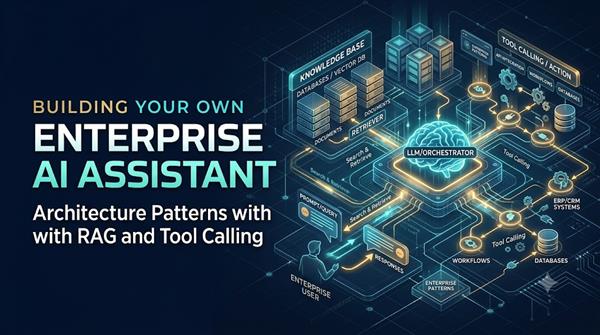
Building Your Own Enterprise AI Assistant: Architecture Patterns with RAG and Tool Calling
 Tutorial
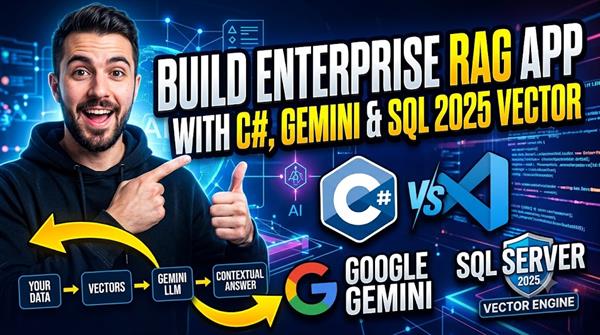
Building an Enterprise RAG Application in C# with Google Gemini and SQL Server 2025 Vector Engine
 Tutorial
How to Build RAG in C# with Google Gemini API and Semantic Kernel
Comments

|
|
| Follow up comments |
| {{e.Name}} {{e.Comments}} |
{{e.days}} | |
|
|
||
|
|
||
| {{r.Name}} {{r.Comments}} |
{{r.days}} | |
|
|
||